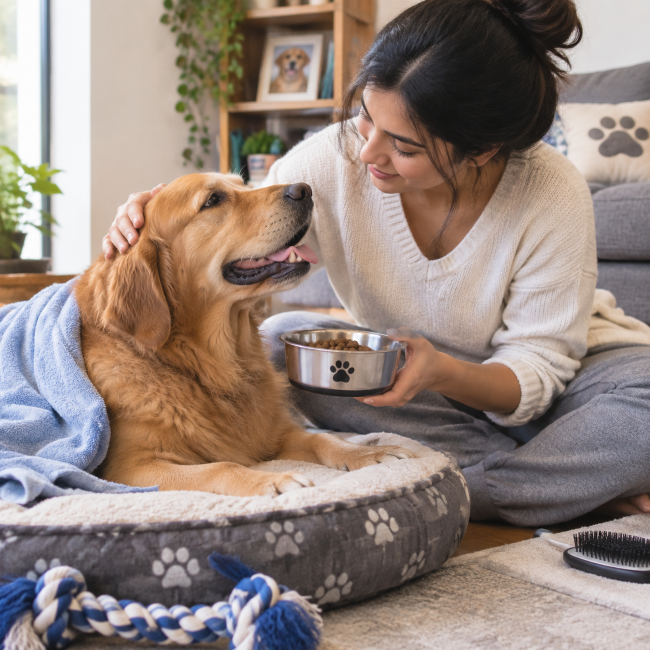
Bringing a dog into your home can be a wonderful experience. Dogs provide companionship, affection, and plenty of opportunities for fun. But owning a dog also means taking responsibility for its health, safety, training, and daily needs.
If you are a first-time dog owner, you may wonder where to begin. How much should you feed your dog? How often should you exercise it? What vaccinations does it need? How do you keep its teeth, coat, ears, and nails healthy?
This beginner’s guide explains the basics of responsible dog care in simple, practical terms.
1. Provide Good-Quality Food
Good nutrition is one of the foundations of dog health. Dogs need a balanced diet that provides the nutrients required for growth, energy, and normal body functions.
Choose a complete and balanced dog food appropriate for your dog’s:
- Age
- Size
- Activity level
- Breed or breed mix
- Health needs
Puppies generally have different nutritional needs from adult and senior dogs. Large-breed puppies may also require food formulated specifically for their growth needs.
Follow the feeding guidance on the food package, but remember that every dog is different. Your veterinarian can help you determine an appropriate feeding amount.
Avoid making table scraps a major part of your dog’s diet. Some human foods can be unhealthy or dangerous for dogs.
Always provide fresh, clean drinking water. Wash food and water bowls regularly.
2. Give Your Dog Regular Exercise
Dogs need physical activity, but the right amount varies considerably from one dog to another.
A young, energetic dog may need considerably more activity than an older dog. Breed, age, size, fitness, and health all matter.
Exercise can include:
- Walks
- Playing fetch
- Safe outdoor exploration
- Swimming for dogs that enjoy it
- Interactive games
- Supervised play with suitable dogs
- Training activities
Exercise is not only about physical fitness. Mental stimulation is also important. Puzzle toys, training sessions, scent games, and interactive play can help prevent boredom.
Start gradually if your dog is not accustomed to exercise. Avoid forcing a dog to continue exercising when it is tired, overheated, or showing signs of distress.
3. Make Your Home Safe
Before bringing a dog home, look at your house from the dog’s point of view.
Keep potentially dangerous items out of reach, including:
- Medicines
- Cleaning products
- Chemicals
- Certain foods
- Small objects that could be swallowed
- Electrical cords
- Sharp objects
- Toxic plants
Dogs are naturally curious. A puppy may chew things that an adult dog would ignore.
Keep doors, gates, balconies, and fences secure. Make sure your dog cannot easily escape.
If your dog spends time outdoors, provide shade, shelter, and plenty of water, particularly during hot weather.
4. Give Your Dog a Comfortable Place to Sleep
Every dog needs a safe and comfortable place to rest.
A dog bed, crate, or other suitable sleeping area can provide your pet with a place where it feels secure. Keep bedding clean and wash it regularly.
A crate can be useful for training and transportation when introduced positively. It should never be used as punishment or as a place where a dog is confined for excessive periods.
5. Visit the Veterinarian Regularly
Regular veterinary care is an important part of responsible dog ownership.
A veterinarian can monitor your dog’s overall health and help you establish an appropriate schedule for:
- Vaccinations
- Parasite prevention
- Dental care
- Weight management
- Routine health examinations
- Spaying or neutering
- Other preventive care
Vaccination needs depend on factors such as age, medical history, lifestyle, environment, and exposure risk. Your veterinarian can recommend the appropriate vaccination schedule for your dog.
Do not wait until your dog appears seriously ill before seeking veterinary advice. Routine examinations can help identify some problems before they become more serious.
6. Keep Your Dog Free From Fleas and Ticks
Fleas and ticks can cause discomfort and may transmit diseases.
Check your dog regularly, particularly after spending time outdoors. Your veterinarian can recommend an appropriate flea, tick, and parasite-control program based on your dog’s age, location, lifestyle, and health.
Do not use a parasite treatment simply because it worked for another dog. Products are not suitable for every animal, and some can be dangerous if used incorrectly.
7. Take Care of Your Dog’s Teeth
Dental care is often overlooked by new dog owners.
Plaque and tartar can build up on the teeth and contribute to gum disease and other oral problems. Regular brushing with toothpaste specifically made for dogs can help maintain oral hygiene. Never use ordinary human toothpaste unless your veterinarian specifically advises otherwise.
Introduce tooth brushing slowly. Let your dog become comfortable with having its mouth and teeth touched before attempting a full brushing routine.
Your veterinarian should also check your dog’s teeth during routine examinations.
Bad breath, red or swollen gums, excessive drooling, difficulty eating, loose teeth, or other unusual mouth changes deserve veterinary attention.
8. Groom Your Dog Regularly
Grooming is about more than making your dog look clean. It also gives you an opportunity to notice changes in the skin, coat, ears, paws, and body.
Grooming may include:
- Brushing the coat
- Bathing when necessary
- Nail trimming
- Ear checks
- Paw checks
- Dental care
- Checking for parasites or unusual lumps
The frequency of brushing depends on the type of coat. Long-haired dogs generally require more frequent brushing than short-haired dogs.
Use shampoo made specifically for dogs. Human shampoos may irritate a dog’s skin.
Do not bathe your dog excessively. Many dogs only need bathing occasionally unless they become dirty or have a skin condition requiring a different routine.
9. Keep Your Dog’s Nails at a Healthy Length
Overgrown nails can become uncomfortable and can interfere with normal walking.
If you hear your dog’s nails clicking on hard floors, they may be too long.
Nail trimming can be frightening for some dogs. Introduce it slowly and reward calm behavior. If you are unsure how to trim the nails safely, ask your veterinarian or a professional groomer to show you the correct technique.
10. Look After Your Dog’s Ears
Check your dog’s ears regularly for unusual:
- Redness
- Swelling
- Discharge
- Bad odor
- Excessive wax
- Scratching
- Head shaking
Do not insert cotton swabs or other objects deep into your dog’s ear canal. Incorrect cleaning can cause injury.
If your dog repeatedly scratches its ears or shakes its head, ask your veterinarian to examine the ears.
11. Give Your Dog Training and Socialization
Training helps dogs understand what is expected of them and can make everyday life easier for both the dog and the owner.
Start with simple commands such as:
- Sit
- Stay
- Come
- Leave it
- Down
Use rewards, praise, and patience. Positive training methods can help create trust between you and your dog.
Socialization is also important, especially when a dog is young. Introduce your dog gradually and positively to different people, safe environments, sounds, and experiences.
Do not use hitting, intimidation, or harsh punishment as training methods.
12. Establish a Daily Routine
Dogs generally benefit from predictable routines.
Try to maintain regular times for:
- Feeding
- Walks
- Exercise
- Toilet breaks
- Training
- Rest
- Play
A consistent routine can make it easier for a dog to understand what happens during the day.
Your routine does not need to be perfect. What matters most is providing regular care and paying attention to your dog’s individual needs.
13. Give Your Dog Attention and Companionship
Dogs are social animals and need interaction with their human family.
Spend time talking to your dog, playing, walking, training, and simply being together.
Pay attention to changes in behavior. A normally friendly dog that suddenly becomes withdrawn, unusually aggressive, restless, or fearful may be experiencing stress, pain, illness, or another problem.
Behavior changes should not automatically be dismissed as “bad behavior.”
14. Teach Your Dog Good Toilet Habits
House training requires patience and consistency.
Take your puppy outside regularly, particularly:
- After waking
- After eating
- After drinking
- After playing
- Before bedtime
Praise your dog immediately after it toilets in the correct place.
Accidents are normal during the learning process. Clean them thoroughly and avoid punishing the dog after an accident.
If an adult dog that was previously house-trained suddenly begins having accidents indoors, speak with your veterinarian because a medical problem could sometimes be involved.
15. Identify Your Dog Properly
Even a well-trained dog can become lost.
Use appropriate identification such as:
- Collar
- Identification tag
- Microchip
- Required local license
Keep your contact information up to date.
The ASPCA recommends identification measures such as a collar, ID tag, and microchip to improve the chances of a lost dog being returned home.
16. Use a Leash and Practice Safe Walking
Unless you are in a secure, designated off-leash area, keep your dog under appropriate control.
Use a properly fitted collar or harness and a suitable leash.
Teach your dog to walk calmly rather than pulling constantly. Begin in a quiet area and gradually introduce more distractions.
Never assume that a friendly dog will safely cross a busy road or approach every person or animal.
17. Watch Your Dog’s Weight
Being overweight can put unnecessary stress on a dog’s body and contribute to health problems.
Check your dog’s weight regularly and pay attention to its body condition rather than relying only on the number on a scale.
Your veterinarian can help you determine an appropriate weight and feeding plan.
Treats should be given in moderation and should not replace a balanced diet.
18. Learn to Recognize Warning Signs
Dog owners should become familiar with their pet’s normal behavior.
Contact a veterinarian if you notice concerning changes such as:
- Loss of appetite
- Repeated vomiting
- Persistent diarrhea
- Difficulty breathing
- Severe weakness
- Sudden behavior changes
- Unusual bleeding
- Difficulty walking
- Persistent coughing
- Severe pain
- Seizures
- Collapse
- Significant swelling
Some symptoms require urgent veterinary attention. When in doubt, it is safer to contact a veterinarian rather than trying to diagnose the problem yourself.
19. Never Give Human Medicine Without Veterinary Advice
One important rule for every new dog owner is simple: do not give your dog human medication unless your veterinarian specifically tells you to do so.
Some medicines that are commonly used by people can be dangerous to dogs.
Keep medicines and potentially poisonous substances securely stored. If you believe your dog has swallowed something dangerous, contact a veterinarian or appropriate animal poison service immediately.
20. Build a Basic Dog-Care Kit
A new dog owner will find it useful to have basic supplies ready.
Your checklist may include:
- Appropriate dog food
- Food and water bowls
- Collar and identification tag
- Leash
- Comfortable bed
- Safe toys
- Grooming brush
- Dog shampoo
- Dog toothbrush and toothpaste
- Nail clippers
- Waste bags
- Crate or carrier when appropriate
- Cleaning supplies
- Veterinary records
The exact items you need will depend on your dog’s age, size, breed, lifestyle, and health.
21. Give Your Dog Time to Adjust
If you have just brought home a new dog, remember that everything may be unfamiliar.
Your dog may need time to adjust to:
- A new home
- New people
- New sounds
- New smells
- New routines
- New rules
Keep the first few days relatively calm. Establish a routine and allow your dog to explore safely.
Be patient. Building trust takes time.
A Simple Daily Dog-Care Routine
A basic routine might look like this:
Morning: Fresh water, breakfast, toilet break, and a walk or play session.
Daytime: Rest, mental stimulation, toilet breaks, and companionship.
Evening: Dinner, exercise or play, training, and another toilet break.
Before bed: Fresh water, a final toilet break, and a comfortable sleeping area.
This is only an example. Puppies, senior dogs, working breeds, and dogs with health problems may need different routines.
Frequently Asked Questions
How often should I feed my dog?
It depends on your dog’s age, size, health, activity level, and the type of food being fed. Puppies generally require more frequent meals than adult dogs. Ask your veterinarian if you are unsure about the right feeding schedule.
How much exercise does a dog need every day?
There is no single exercise requirement that applies to every dog. Age, breed, size, fitness, and health all influence exercise needs. Start gradually and adjust activity according to your dog’s condition and behavior.
How often should I bathe my dog?
Many dogs only need occasional bathing. The appropriate frequency depends on the dog’s coat, lifestyle, skin condition, and how dirty the dog becomes. Use a dog-specific shampoo and rinse thoroughly.
How often should I brush my dog’s teeth?
Regular brushing is beneficial. Introduce it gradually and use toothpaste made for dogs. Your veterinarian can also advise you about professional dental care.
When should I take my dog to the veterinarian?
Take your dog for routine preventive examinations and whenever you notice unusual symptoms or significant changes in behavior, appetite, energy, breathing, or movement.
Is it necessary to vaccinate my dog?
Vaccinations help protect dogs against several serious infectious diseases. The appropriate vaccines and schedule depend on the dog’s age, health, lifestyle, and exposure risk. Your veterinarian should establish the vaccination plan.
Can I give my dog food from my plate?
It is better not to make table food a regular part of your dog’s diet. Some human foods are unsafe for dogs, while excessive treats can contribute to an unhealthy diet or weight gain.
How can I tell if my dog is happy and healthy?
A healthy dog generally has normal energy for its age, a suitable appetite, normal toilet habits, and behavior that is typical for that individual dog. Regular veterinary examinations are important because some health problems may not be obvious at first.
Final Thoughts
Taking care of a dog does not have to be complicated. The basics are straightforward: provide appropriate food and fresh water, exercise your dog, maintain good hygiene, provide training and companionship, keep your home safe, and arrange regular veterinary care.
Most importantly, get to know your individual dog. Every dog has different needs depending on age, breed, personality, lifestyle, and health.
Responsible dog ownership is a long-term commitment, but the companionship and affection a dog can bring to a home make that commitment worthwhile.
Medical Disclaimer
This article is provided for general educational and informational purposes only. It is not a substitute for professional veterinary advice, diagnosis, or treatment. Every dog is different, and its nutritional, exercise, grooming, vaccination, and medical needs may vary. Always consult a qualified veterinarian about your dog’s individual health and care. If your dog is seriously ill, injured, having difficulty breathing, experiencing seizures, collapsing, or showing another emergency symptom, seek veterinary care immediately.